
Your implementation choices define how much of the merchant experience your platform owns. The more your platform owns, the more control you have over the merchant experience. The more BlueSnap owns, the less operational work your platform needs to manage and the faster you may be able to go live.
Before you build, decide how much of the merchant experience your platform wants to own. Your choices affect how merchants apply, who handles verification follow-up, and who manages the merchant relationship after approval.
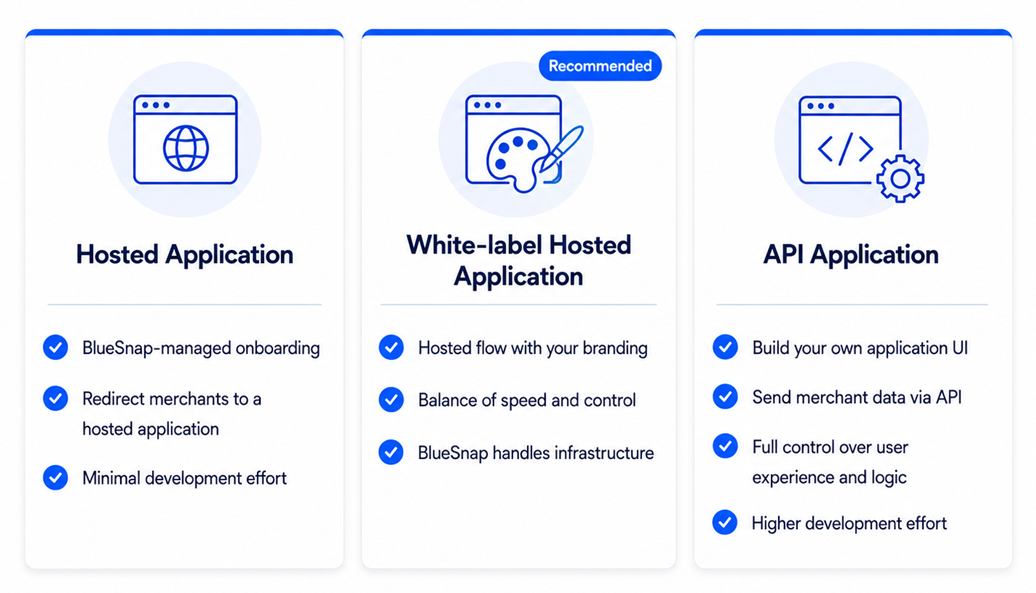
Decide the Merchant Application Experience
Embedded Payments will be implemented as one of three merchant application experiences, which determines how merchants submit applications and how much onboarding UI your platform builds. For more details about these options, refer to Merchant Onboarding.
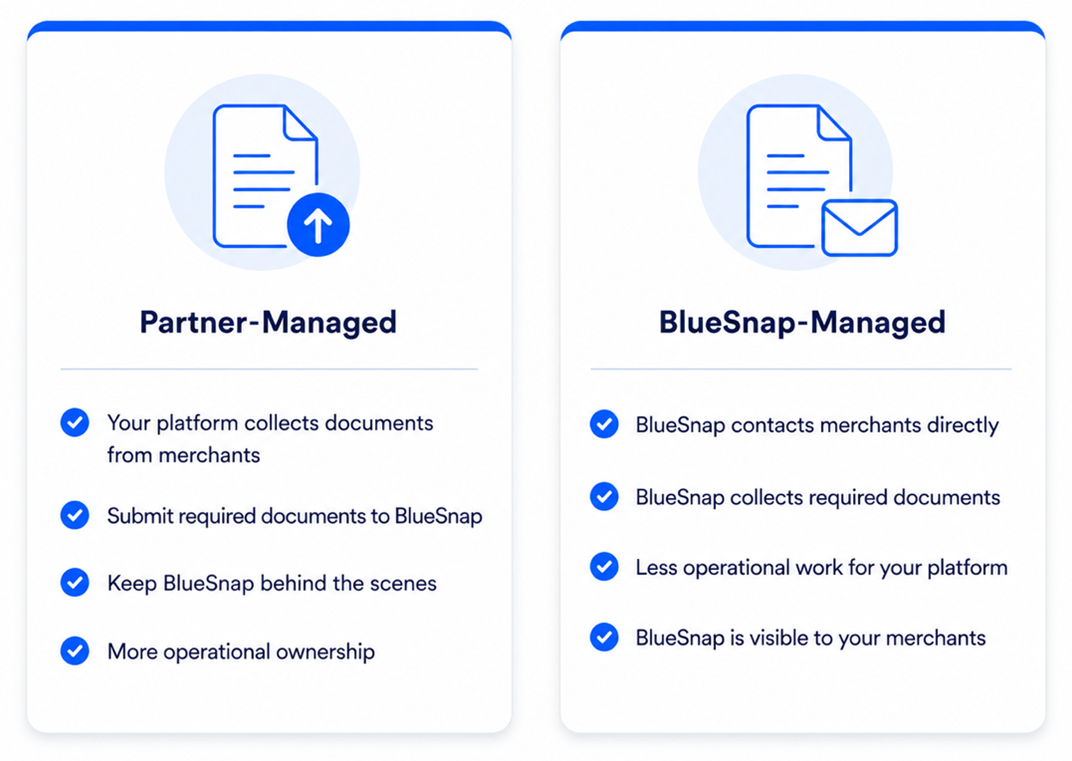
Decide Who Collects Verification Documents
After a merchant submits an application, BlueSnap may request additional documents to complete verification. Either you or BlueSnap can own the verification follow-up experience, which determines how merchants are contacted and how their documents are collected.
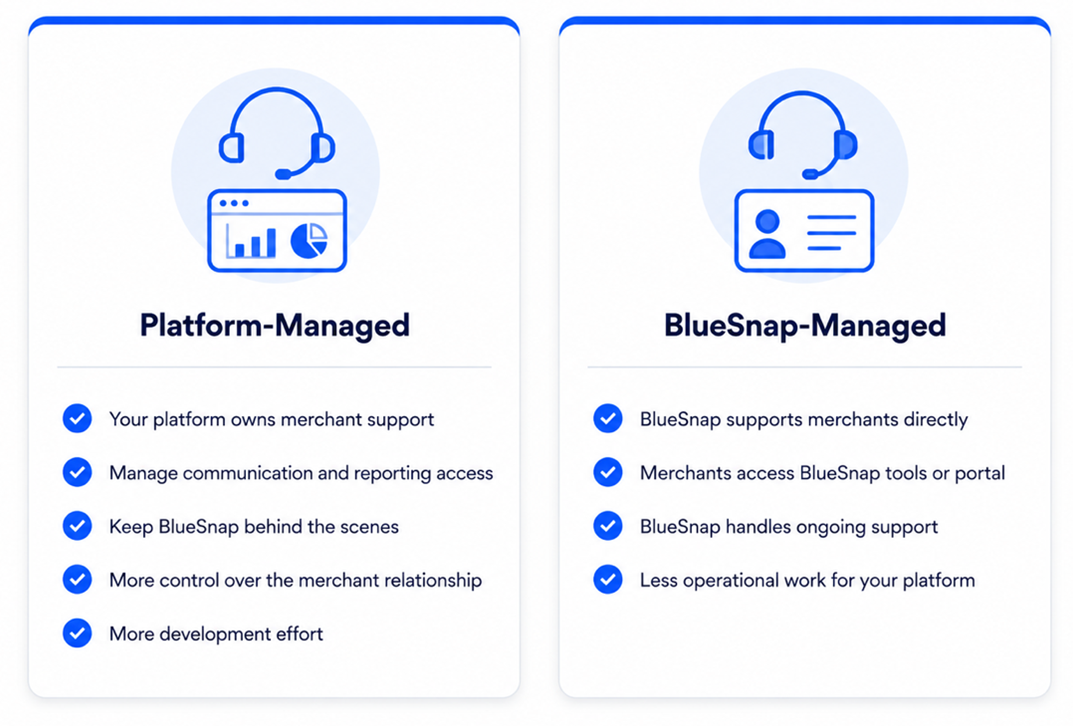
Decide Who Manages the Merchant Relationship
After merchants are approved, decide whether your platform or BlueSnap supports the ongoing merchant experience. This choice affects support, reporting, merchant access to BlueSnap portal, and BlueSnap visibility.
Next Steps
Once you've decided what your integration will look like, continue with:
- Platform Onboarding to prepare for implementation with BlueSnap.
- Merchant Onboarding to create your application and onboard merchants.
- Merchant Verification & Setup to handle additional document requests and testing.
- Processing Payments to handle payments for your merchants.